
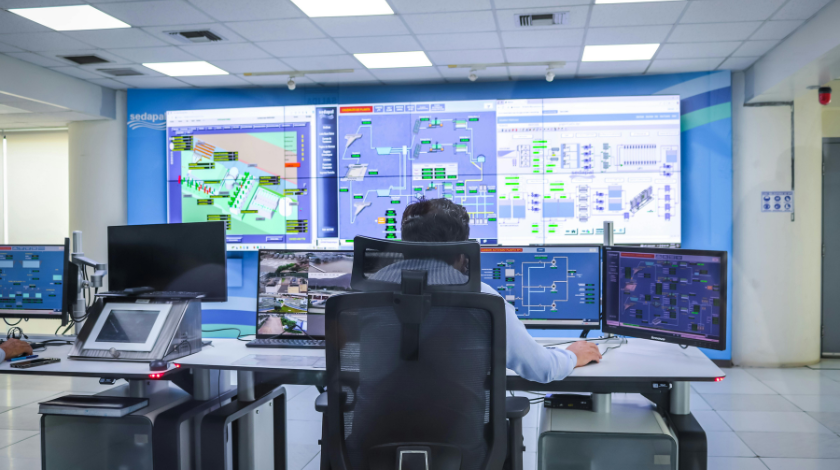
When we hear the phrase “Advanced Systems Laboratory,” our minds often wander to scenes from science fiction movies. We imagine glass walls, glowing blue holographic screens, and robots moving about with clinical precision. While the reality is a bit more grounded in heavy machinery and intense mathematics, the work being done in these facilities is arguably more impressive than anything Hollywood can dream up. An Advanced Systems Laboratory, or ASL, is the beating heart of a nation’s technological sovereignty. It is where raw materials are transformed into sophisticated machines that can travel across continents or survive the blistering heat of re-entering the Earth’s atmosphere.
I have always been fascinated by how these labs manage to solve problems that seem impossible. How do you build a vehicle that can travel at five times the speed of sound without melting? How do you ensure a guidance system stays accurate over thousands of kilometers? These are not just academic questions. They are the daily challenges faced by scientists and engineers working in these high-stakes environments. In this article, we are going to peel back the curtain on these laboratories to understand how they work, why they are so important, and the incredible science that keeps them at the cutting edge.
What exactly is an Advanced Systems Laboratory?
At its simplest level, an Advanced Systems Laboratory is a specialized research and development center focused on complex, multi-disciplinary engineering. It is not just a place where people study one thing like chemistry or physics. Instead, it is a melting pot where different fields of science collide. You might have a chemical engineer working on a new type of solid fuel right next to a mechanical engineer who is designing a lightweight rocket casing. The “advanced” part of the name refers to the fact that these labs usually work on the absolute limits of what is currently possible.
Most people associate these labs with defense and aerospace. This is because the military often has the most demanding requirements. They need systems that are faster, stronger, and more reliable than anything found in the commercial world. For example, if a delivery drone fails, a package might be late. If a strategic defense system fails, the consequences can be catastrophic. Therefore, an ASL is characterized by a culture of extreme precision and rigorous testing. They don’t just build a prototype and hope it works. They simulate every possible failure and test every component until they know exactly how it will behave under pressure.
The Pillars of Innovation: How ASL Operates
To understand how a lab like this functions, you have to look at the different “pillars” of technology they manage. The first major pillar is propulsion. This is the science of moving things. In an ASL, this usually involves solid motor technology. Unlike liquid fuel rockets, which use complex pumps and valves, solid motors are like giant, controlled fireworks. They are incredibly powerful and can be stored for long periods, which makes them perfect for defense. Developing these motors requires a deep understanding of combustion and fluid dynamics. Scientists have to ensure that the fuel burns at a steady rate so the vehicle doesn’t shake itself to pieces.
The second pillar is Navigation, Guidance, and Control, often shortened to NGC. Think of this as the “brain” of the system. A powerful engine is useless if you cannot point it in the right direction. The labs work on developing gyroscopes, accelerometers, and complex algorithms that allow a vehicle to know exactly where it is in space. In the modern era, this has become even more complex with the addition of satellite-based positioning and AI-driven path correction. I remember reading about how early guidance systems were mechanical marvels with spinning wheels, but today, it is all about silicon chips and lines of code that can make decisions in microseconds.
The third pillar is structural design. This is where the “body” of the system is created. The challenge here is a constant tug-of-war between weight and strength. You want the vehicle to be as light as possible so it can go faster and farther, but it also has to be strong enough to withstand the incredible forces of launch and flight. This leads us into one of the most exciting areas of research: materials science.
The Magic of Materials: Why Carbon Composites Matter
If you ask any scientist at an Advanced Systems Laboratory what their biggest headache is, they will probably say “heat.” When an object travels at high speeds through the air, friction creates temperatures that would melt most metals. This is especially true for re-entry vehicles, which have to survive the transition from the vacuum of space back into the atmosphere. This is where carbon-carbon composites come into play. These are materials made by embedding carbon fibers into a carbon matrix. It sounds simple, but the result is a material that actually gets stronger as it gets hotter.
I find this to be one of the most counter-intuitive and brilliant pieces of engineering. Most things we use daily, like plastic or steel, weaken when they get hot. But these advanced composites are designed to endure thousands of degrees Celsius. The lab spends years perfecting the manufacturing process for these materials because even a tiny flaw can lead to a total failure. They use massive machines called autoclaves to bake these materials under high pressure, turning them into shields that protect the delicate electronics inside a missile or a spacecraft.
A Case Study in Excellence: ASL Hyderabad
When discussing this topic, it is impossible not to mention the Advanced Systems Laboratory in Hyderabad, India. This lab, part of the Defense Research and Development Organization (DRDO), is a world-class example of what these institutions can achieve. For decades, ASL Hyderabad has been the driving force behind the Agni series of missiles. These are not just weapons; they are symbols of technological independence. Before India developed its own capabilities, it had to rely on others for sensitive technologies. The scientists at ASL changed that by mastering the art of long-range ballistic systems.
The journey of ASL Hyderabad is a great example of persistence. In the early days, they faced numerous international sanctions and “technology denials.” They weren’t allowed to buy certain materials or computers from other countries. Instead of giving up, they decided to build everything from scratch. This led to a massive boost in local innovation. They developed their own composite materials, their own navigation systems, and their own testing facilities. It is a powerful reminder that an Advanced Systems Laboratory is more than just a building; it is a hub for national pride and self-reliance.
The Challenges of Modern Aerospace Engineering
Working in an ASL is not for the faint of heart. One of the biggest challenges is the sheer cost of failure. In most software companies, you can “move fast and break things.” If your app crashes, you just send out a patch. In an advanced systems lab, if your rocket crashes, you have just lost millions of dollars and years of work. This creates a high-pressure environment where every decimal point matters. I’ve spoken with engineers who say they lose sleep before a major test flight because they are mentally re-checking their calculations for the thousandth time.
Another challenge is the environment itself. These labs have to simulate conditions that don’t exist on Earth. They build wind tunnels that can simulate Mach 5 speeds and thermal chambers that can mimic the cold of deep space or the heat of a sun-facing surface. Creating these test environments is a feat of engineering in its own right. You are essentially building a small, controlled version of the most extreme places in the universe right inside a laboratory.
Beyond Defense: The Civilian Applications
While the primary focus of an ASL is often national security, the work they do often leaks out into the civilian world in ways we don’t always notice. This is what we call “spin-off technology.” For example, the high-strength carbon fibers developed for missiles are now used to make lighter, more fuel-efficient airplanes like the Boeing 787. The GPS technology that we use to find the nearest coffee shop started as a high-end navigation project for military systems.
Even in medicine, the influence of these labs is felt. Some of the materials used for heat shields have been adapted for use in prosthetic limbs because they are incredibly light and do not react negatively with the human body. I believe this is a crucial point to remember. While we might debate the ethics of defense spending, the technological progress driven by these laboratories often makes life better for everyone in the long run. They push the boundaries of what humans can do, and those lessons eventually benefit the entire world.
Careers and the Future of Advanced Systems Research
If you are a student or a young professional wondering how to get into this field, the path is challenging but rewarding. Most people working in an ASL have backgrounds in aerospace, mechanical, or electrical engineering. However, there is a growing need for computer scientists and data analysts. As systems become more “intelligent,” the ability to write secure, efficient code is just as important as the ability to forge metal.
In my opinion, the future of these labs lies in the integration of Artificial Intelligence. We are moving toward a world of “swarming” systems, where multiple small vehicles work together to achieve a goal. This requires a level of coordination that humans cannot manage manually. The next generation of scientists at these labs will likely be focused on how to make these systems think for themselves while ensuring they remain safe and predictable. It is a brave new world, and the Advanced Systems Laboratories will be the ones writing the map for it.
Conclusion
The Advanced Systems Laboratory is a place where the impossible becomes routine. It is a testament to human curiosity and our drive to protect and explore. From the intense heat of carbon-carbon composites to the silent precision of a navigation algorithm, the work done in these labs defines the modern era. Whether it is the DRDO in India or similar facilities in other parts of the world, these institutions are the silent guardians of progress. They remind us that with enough math, science, and determination, we can conquer even the most hostile environments.
As we look to the future, the role of the ASL will only grow. As we aim for the moon, Mars, and beyond, and as we look for new ways to keep our nations safe, these laboratories will be at the forefront. They are the bridges between a simple idea and a soaring reality. Next time you see a rocket launch or hear about a new breakthrough in materials science, take a moment to think about the thousands of scientists in labs across the world who made it possible. They are the true architects of our high-tech future.
Frequently Asked Questions (FAQ)
1. What is the main purpose of the Advanced Systems Laboratory (ASL)?
The primary goal of an ASL is to research, develop, and test high-end technological systems, mainly for defense and aerospace. This includes work on missiles, propulsion systems, and advanced materials that can survive extreme conditions.
2. Where is the most famous ASL located?
One of the most prominent is the Advanced Systems Laboratory in Hyderabad, India. It is a key part of the DRDO and is famous for developing the Agni missile series.
3. What are carbon-carbon composites?
These are high-performance materials used in aerospace. They consist of carbon fibers reinforced in a carbon matrix. They are unique because they can withstand extreme heat (over 2000°C) without losing their structural integrity, making them perfect for missile nose cones and heat shields.
4. How can I start a career at an Advanced Systems Lab?
Usually, you need a strong background in STEM fields. Engineering degrees in Aerospace, Mechanical, Electronics, or Computer Science are the most common. In many countries, you must also pass specific civil service or defense entrance exams like GATE in India.
5. Does ASL work only on weapons?
While their core mission is often defense-related, much of their research is used for peaceful purposes. This includes satellite launch vehicle technology, advanced materials for medical use, and innovations in civilian aviation.